
A resourcing decision made on gut feel rarely shows up as a problem right away. It surfaces weeks later, when a project falls behind and nobody can say with confidence who actually has capacity to pick up the slack. As firms take on more overlapping projects in 2026, spreadsheets and shared calendars aren’t enough to answer that question.
By the end of this guide, you’ll know exactly what resource management software should do for your firm and which platforms are worth putting in front of your team in 2026. For this evaluation, we’ve identified the pain points that matter most when you’re comparing resource management tools:
- Resource allocation accuracy: A system that reflects real-time team capacity, not last week’s snapshot, so project managers can assign tasks with confidence.
- Capacity planning and forecasting: The ability to see future resource needs across multiple projects, not just what’s happening this week.
- Integration with project management and financial systems: A resource planning tool that connects to time tracking, billing, and the project management platform your team already relies on.
- Usability for project managers and team members: An interface people actually want to open, with drag and drop functionality that makes scheduling changes fast instead of painful.
- Reporting and utilization visibility: Clear reporting on resource utilization, team workloads, and project status, so leadership isn’t reacting to problems after they’ve already hurt margin.
- Scalability across multiple teams and projects: A platform that holds up as you add more projects, more teams, and more complexity, not just a basic scheduling spreadsheet with a nicer interface.
What Is Resource Management Software?
Resource management software is a platform that helps organizations plan, schedule, and track how people, time, and skills are allocated across projects. Instead of managing resource allocation through spreadsheets or scattered calendars, a resource management system centralizes team workloads, resource availability, and project needs in one place, so project managers, resourcing leads, and finance teams can make staffing decisions based on data instead of memory.
In practice, this category covers the needs firms typically try to solve through resource planning software, project resource management software, and resource scheduling software, including:
- Assigning the right people to the right projects based on skills, availability, and cost, not just who happens to be free.
- Forecasting future resource needs so hiring and staffing decisions get made ahead of a capacity gap, not after one.
- Tracking actual hours against planned allocations to catch scheduling conflicts and overbooking before they derail a project.
- Giving leadership real time visibility into resource utilization, so decisions about new work are grounded in actual team capacity.
- Supporting multiple teams and multiple projects at once, without losing the day-to-day view a project manager needs to keep work moving.
Resource Management Software vs Human Resource Management Software: What’s The Difference?
It’s worth noting that resource management software is not the same as human resource management software or general software for human resources management, which center on hiring, payroll, and employee records. A resource management system instead acts as a centralized platform for project planning and staffing: resource scheduling focuses on day-to-day assignments, while capacity planning looks further out to future resource needs.
The Benefits of Resource Management Software
Managing resources effectively supports successful project delivery and gives your firm a strategic advantage when planning future projects. Here’s what firms gain when they replace manual processes with a dedicated resourcing system:
- Higher resource utilization without burning out your best people. When you can see team capacity across roles, skills, and dates, resource allocation becomes proactive instead of reactive, which helps you stop overloading your go-to team members while others sit underused.
- Fewer missed deadlines and scheduling conflicts. A shared, accurate view of resource availability means project managers catch conflicts before they become missed deadlines, not after a client asks why a deliverable is late.
- More accurate project forecasting. When resource planning connects to actual hours and project status, forecasting future resource needs becomes a real exercise, not a spreadsheet best guess.
- Better financial management tied to staffing decisions. Every resourcing choice affects margin. A connected resource management system lets you see the cost of an assignment before you make it, not after the invoice comes up short.
- Stronger team collaboration and morale. When team members can see their own workload and upcoming assignments, there is less confusion, fewer last-minute reassignments, and more trust in how work gets distributed.
- Less time spent on manual processes. The best resource management tools cut down on the back-and-forth of chasing availability over email or chat, freeing project managers to monitor progress and focus on actual project delivery, which also lifts team productivity across the firm.
- Valuable insights that support strategic planning. With utilization and forecasting data in one place, leaders get valuable insights that support strategic planning instead of reacting to problems after they’ve already hurt margin.
What Features Should the Best Resource Management Software Have?
Most calendar tools can show you who is busy this week. Fewer can help you plan three months out, model a hiring decision, or connect resource allocation to what a project actually costs to deliver.
Here are the resource management features that separate a real platform from basic scheduling, along with the advanced features worth prioritizing once your team is ready for them. A dedicated tool built specifically for resourcing will always go deeper here than a general project tracker.
Real-Time Resource Allocation and Capacity Planning
Resource allocation should reflect what is happening today, not what was true when the spreadsheet was last updated. Strong platforms show current team capacity, team members availability, and upcoming project needs at a glance, so project managers can assign tasks with confidence instead of guessing.
Recurring tasks and standing commitments should be modeled just as easily as one-off assignments, so resourcing stays accurate week over week. Capacity planning tools should also let you model several projects at once, so a new opportunity doesn’t get staffed in isolation from everything else already on the books, and project progress stays visible alongside capacity.
Drag and Drop Scheduling With a Visual Timeline
Resource scheduling should not require a training manual. The best resource scheduler software uses a drag and drop interface, a visual project timeline, and shared resource calendars that update instantly across the team, making it possible to move an assignment, extend a project, or cover for someone on leave in seconds, not a support ticket. This kind of usability directly affects adoption, and a resourcing tool nobody wants to open quietly turns back into a spreadsheet within a quarter.
Capacity Heat Maps and Utilization Reporting
Numbers alone don’t always tell the story fast enough. Capacity heat maps give project managers and resourcing leads a visual, color-coded view of who is overbooked, who has room, and where resource needs are about to collide with resource availability, all without opening a report. Paired with solid utilization management, this combination acts as an early warning system for burnout and missed deadlines before either one happens.
Skills-Based Matching
Availability alone does not make someone the right fit for a project. The strongest resource planning tools support skills matching, letting you tag team members by skill, certification, or specialty, then match resource needs to the people who can actually deliver the work, not just whoever shows a free hour on the calendar. This matters most for firms managing multiple teams across different disciplines, where staffing the wrong person costs more than staffing nobody at all.
Resource Forecasting and Scenario Planning
Effective resource management means looking past this week. Resource forecasting should project future resource needs based on pipeline, historical data, and current team capacity, so hiring and staffing decisions get made ahead of a gap, not in reaction to one. The best tools also support scenario planning, letting you compare what happens to team workloads if you win that next contract versus if you don’t.
Time Tracking Tied to Actual vs. Planned Hours
A resource tracker is only as useful as the data feeding it. Systems that connect resource scheduling to time tracking let you compare actual hours against what was planned, which surfaces scheduling conflicts and scope creep while there is still time to correct course. This connection is also what turns a resourcing tool into resource tracking software that finance can actually trust for reporting.
Integrations With Project Management and Financial Systems
A resource management platform that lives on its own island creates more manual work than it solves. Reliable integrations with your project management software, accounting system, and billing tools keep resource data, project status, and financial management aligned, instead of forcing your team to reconcile three different sources of truth. This becomes even more important as firms scale across multiple teams and add more complex billing and reporting needs.
Team Collaboration and Workload Transparency
Resourcing works better when it is not a black box. Giving team members visibility into their own workload view, and giving project managers a shared view across projects, helps enhance collaboration and reduces the last-minute reshuffling that damages both morale and client delivery. The best platforms make this kind of team collaboration a team focused, built-in feature, not an afterthought bolted on with extra permissions and workarounds.
How to Choose Resource Management Software
The right resource management tool depends less on feature count and more on fit. A five-person team has very different resource planning needs than a 150-person firm managing multiple rate structures and tight margin targets, so get clear on team size, complexity, and whether resourcing needs to connect to billing and financial management before comparing vendors.
It also helps to think about where resourcing sits in your broader tech stack. A standalone resource scheduler software tool that doesn’t talk to your financial systems will eventually create more manual work than it saves, so firms that want resourcing to protect margin tend to do best with a system built on the same financial foundation as their billing and project management.
2026 Resource Management Software Ranking
This 2026 ranking focuses on platforms that go beyond basic scheduling. Each tool below was evaluated on how well it supports core resourcing needs end to end: resource allocation accuracy, capacity planning and forecasting, integration with financial and project systems, and reporting that leadership can actually use to protect utilization and profitability.
Resource Management Software: Comparison
Before diving into individual reviews, here’s a side-by-side look at how the top resource management tools on the market compare heading into 2026.
| Tool | Key Features | Best For | Pricing | G2/Capterra Rating |
| BigTime | Integrated resource and financial planning, utilization forecasting, capacity heat maps built on a PSA platform. | Professional services firms that want resourcing tied directly to project financials. | From $20/user/month (Essentials); higher tiers add deeper resourcing. | 4.5 / 4.6 |
| Resource Guru | Drag and drop scheduling, leave management, availability reporting. | Teams that want lightweight, visual scheduling without financial complexity. | From about $6-$18/user/month. | 4.6 / 4.7 |
| Float | Visual project timelines, time tracking, capacity reporting. | Creative and marketing teams managing overlapping project timelines. | From about $6-$14/user/month. | 4.5 / 4.5 |
| Kantata | Enterprise resourcing, project governance, skills-based matching. | Large services organizations with dedicated operations teams. | Custom quote. | 4.2 / 4.2 |
| Saviom | Advanced capacity planning, scenario modeling, forecasting dashboards. | Large enterprises with complex, multi-department resourcing. | Custom quote. | 4.6 / 4.5 |
| Mosaic | AI-powered forecasting, workload heat maps, time tracking integration. | Agencies and consultancies wanting AI-assisted resource planning. | From about $9.99-$16.99/user/month. | 4.8 / 4.7 |
| Runn | Real-time capacity planning, scenario planning, revenue forecasting. | Small and mid-sized teams wanting lightweight resourcing with financial forecasting. | Free plan; paid plans from about $10/user/month. | 4.7 / 4.8 |
| Smartsheet | Spreadsheet-style resource views, task management, workload reporting. | Teams already standardized on Smartsheet for broader project management. | From about $9-$19/user/month; enterprise plans available. | 4.4 / 4.5 |
BigTime
Reviews: G2: 4.5, Capterra: 4.6.
Pros & Cons
Pros:
- Resourcing built on the same financial foundation as delivery and billing. BigTime Resource Management is not a bolt-on calendar; it’s connected to the same cost, rate, and billing logic that runs the rest of the platform, so every staffing decision reflects real project financials, not just open hours.
- Capacity heat maps and utilization reporting that leadership actually uses. Firms get a real time view of team capacity, utilization rates, and forecasted revenue, which turns resourcing from a reactive fire drill into a proactive planning exercise.
- Scales from core resourcing to deeper forecasting as firms grow. Teams can start with straightforward resource scheduling and add more advanced capacity planning, quoting, and analytics as their needs mature, without switching platforms.
- Skills and cost-aware staffing decisions. Because resourcing inherits the same rate and cost logic as billing, project managers can weigh availability against margin impact before making an assignment, not after invoices go out.
Cons:
- Teams that only need basic scheduling may find it broader than necessary. BigTime’s resourcing capabilities show their full value once you also care about utilization, forecasting, and margin protection, not just filling a calendar.
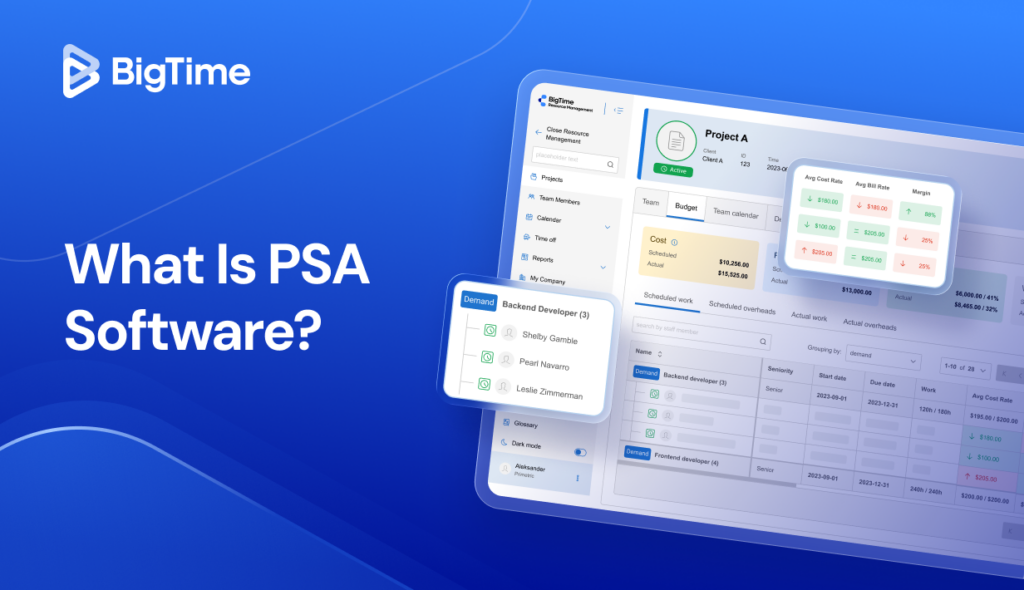
BigTime Resource Management stands out because it treats staffing as a financial decision, not just a scheduling one. Capacity planning is connected directly to the same cost data, billing logic, and utilization targets that drive the rest of the platform, so a resourcing decision already accounts for what a staffing choice will cost and how it affects margin, not just whether someone has an open hour on their calendar.
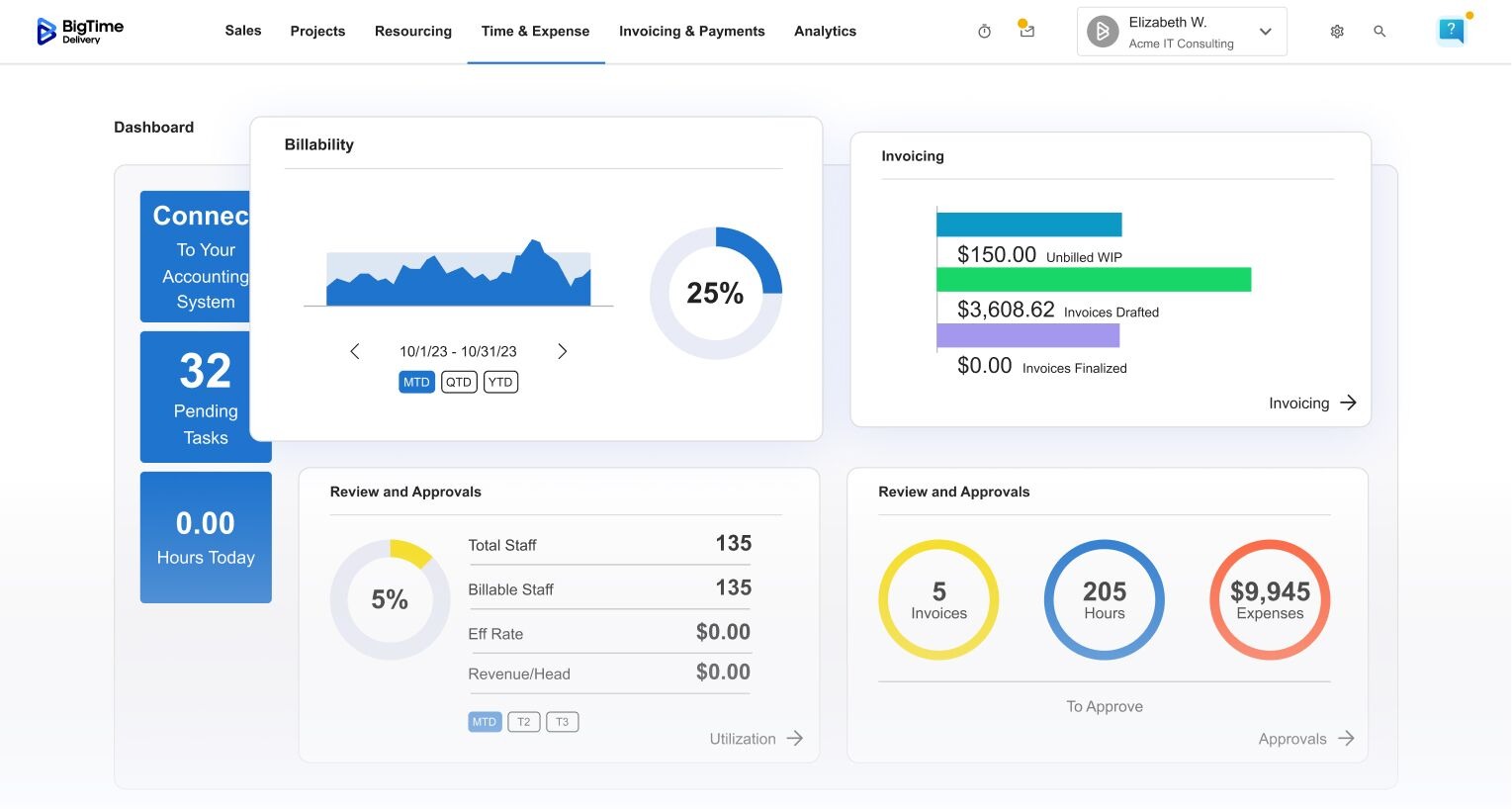
Because resourcing lives inside the same PSA platform as time tracking, billing, and project financial management, firms avoid the manual reconciliation that comes with a standalone resource scheduler software tool. Capacity heat maps and utilization reporting give project managers and finance leaders the same real time visibility into team workloads, and BigTime scales into deeper forecasting and analytics as a firm’s needs grow.
Key Features
- Integrated capacity planning and utilization forecasting: Resourcing decisions are grounded in the same financial data as the rest of the platform, so leaders can forecast utilization and revenue together instead of separately.
- Capacity heat maps: Visual, color-coded views of team capacity make it fast to spot overbooking and available capacity across multiple projects at a glance.
- Skills and rate-aware staffing: Project managers can match resource needs to the right people while accounting for cost and billing rate, not availability alone.
- Real-time reporting on resource utilization: Leadership gets ongoing visibility into utilization and team workloads, supporting proactive resource allocation instead of after-the-fact fixes.
- Connection to project budgets and billing: Resourcing decisions tie directly into project budgets and invoicing, so staffing choices protect margin rather than working against it.
- Scalable resourcing depth: Firms can start with core scheduling and expand into deeper forecasting, quoting, and analytics as complexity grows, all within the same platform.
Pricing
BigTime Essentials starts at $20 per user/month, with Advanced, Premier, and Enterprise tiers adding deeper resourcing, rate management, and analytics capabilities as firms scale. A free personalized demo is available.

Resource Guru
Reviews: G2: 4.6, Capterra: 4.7.
Pros & Cons
Pros:
- Simple, visual scheduling that teams adopt quickly. Resource Guru’s drag and drop interface and clean visual timeline make basic resource scheduling approachable for teams with little patience for a steep learning curve.
- Strong leave management built in. Vacation, sick time, and other time off are tracked alongside project assignments, which helps avoid the classic scheduling conflict of double-booking someone who is actually out of office.
- Fast to set up for smaller teams. Firms can get a working resource scheduler up and running quickly without a lengthy implementation process.
Cons:
- Limited financial and billing depth. Resource Guru focuses on scheduling and availability, so firms that need resourcing tied to project budgets, billing rates, or profitability will need to pair it with another system.
- Reporting is functional but not deep. Utilization reporting covers the basics, but firms looking for advanced forecasting, scenario planning, or capacity heat maps may find it thin for more complex resource planning needs.
- Not built for multi-system financial management. As firms grow past simple scheduling into more complex, multi-team resourcing needs, Resource Guru’s scope can start to feel narrow.
Resource Guru is a resource scheduling tool built around a simple premise: make it fast and visual to see who is available and get them booked. Its drag and drop scheduling and clear visual timeline make it a popular choice for teams that want a straightforward resource scheduler without a long onboarding process. Leave management is baked in from the start, which helps avoid one of the most common resourcing mistakes, booking someone who is actually out of office.
Where Resource Guru comes up short as a full resource management system is depth. It handles resource allocation and basic capacity planning well, but firms that need resourcing connected to billing, project budgets, or profitability will find themselves exporting data into other tools to get the full financial picture. For teams whose resourcing needs are mostly about avoiding scheduling conflicts across multiple projects, that trade-off may be perfectly fine. For firms trying to connect resource utilization to margin and forecasting, it often becomes one piece of a larger stack rather than the system of record.
Key Features
- Drag and drop scheduling: A visual, calendar-style interface makes booking, moving, and adjusting assignments fast and intuitive.
- Leave management: Vacation and time off are tracked in the same view as project assignments, reducing double-booking.
- Availability and utilization reports: Basic reporting shows who is booked, who is free, and how utilization trends over time.
- Waiting list feature: Unconfirmed or tentative work can be tracked separately from confirmed bookings, keeping the main schedule clean.
Pricing
Resource Guru offers tiered plans starting around $6 to $18 per user/month depending on the plan and features included, with a free trial available.
Float
Reviews: G2: 4.5, Capterra: 4.5.
Pros & Cons
Pros:
- Clean, visual timeline for project scheduling. Float’s interface makes it easy to see project timelines and team workloads side by side, which is especially useful for teams juggling several concurrent projects.
- Built-in time tracking. Teams can log actual hours against planned schedules, giving a quick read on how allocations compare to reality.
- Good for cross-functional planning. Marketing, creative, and delivery teams can see resource availability across departments in one shared view.
Cons:
- Limited financial and billing functionality. Float is focused on scheduling and time tracking, so firms needing resourcing tied to rate cards, billing, or profitability will need additional tools.
- Forecasting depth is basic. Float supports capacity planning at a surface level, but scenario planning and longer-range resource forecasting are limited compared to more advanced platforms.
- Can require workarounds for complex approval structures. Larger firms with multi-level project approvals may find Float’s simplicity turns into a limitation as team size grows.
Float is a resource scheduling software built around visual project timelines, designed to help teams see who is working on what and when. Its interface pairs well with time tracking, so teams can compare planned allocations against actual hours without leaving the platform. For creative agencies, marketing teams, and delivery groups managing overlapping projects, Float’s straightforward approach to capacity planning and team collaboration is a common draw.
The trade-off is depth. Float is strong at showing resource availability and project timelines, but it was not built to carry the financial weight that professional services firms typically need from a resource management system. Rate management, billing integration, and detailed profitability reporting sit outside its core scope, which means firms with more complex resourcing needs, multiple rate structures, or a need to connect resourcing to margin will likely need to supplement it with other tools.
Key Features
- Visual project timeline: A drag and drop interface shows project schedules and team assignments in a shared, easy-to-scan view.
- Time tracking: Teams can log actual hours directly against planned schedules, supporting basic actual vs. planned reporting.
- Capacity reporting: Utilization and availability reports give a general sense of team workloads across projects.
- Multiple project views: Teams can toggle between people-first and project-first views depending on what they need to plan.
Pricing
Float’s plans typically start around $6 to $14 per user/month depending on features, with a free trial available before committing.
Kantata
Reviews: G2: 4.2, Capterra: 4.2.
Pros & Cons
Pros:
- Deep resourcing capabilities for large, structured teams. Kantata supports formal capacity planning and resource forecasting that can work well for firms with dedicated operations functions and mature processes.
- Skills-based matching at scale. The platform can match resource needs to specific skills across large teams, which matters for firms managing many concurrent, specialized engagements.
- Strong integration options. Kantata connects with a range of business systems, which can help larger organizations reduce duplicate resourcing data across platforms.
Cons:
- Can feel heavy for day-to-day resourcing. Some teams find navigation and setup more time-consuming than lighter resource scheduling tools, particularly for firms without a dedicated administrator.
- Implementation and configuration take real time. Kantata is often evaluated by firms prepared for a longer rollout, which can be a mismatch for teams that want a resource management tool running quickly.
- Value depends on process maturity. Without disciplined project setup and governance, the platform’s resourcing depth can create more administrative overhead than clarity.
Kantata approaches resource management as part of a broader enterprise PSA platform, with resourcing capabilities built to support large services organizations managing complex, overlapping engagements. Its capacity planning tools support skills-based matching and formal forecasting, which can be genuinely useful for firms with dedicated resourcing or operations teams who can invest the time to configure the system properly.
As a standalone resource management tool, though, Kantata’s breadth can work against firms that want to move fast. Implementation tends to take longer than lighter resource scheduling software, and the platform’s complexity can create friction for project managers who just need a quick, visual way to check team capacity and make a staffing decision. Firms considering Kantata for resourcing should weigh whether they need the full weight of an enterprise PSA platform, or whether a more focused resource planning tool would get them to the same outcome faster.
Key Features
- Resource forecasting and capacity planning: Supports planning across teams and time horizons, useful for firms with structured resourcing processes.
- Skills-based matching: Matches project needs to specific skills and experience across large teams.
- Workflow automation: Automates some resourcing and approval steps once configured, reducing manual coordination.
- Integrations: Connects with common business systems to help align resourcing data with other platforms.
Pricing
Kantata is typically sold through a vendor quote rather than published tiers, with total cost influenced by modules, implementation scope, and team size.
Saviom
Reviews: G2: 4.6, Capterra: 4.5.
Pros & Cons
Pros:
- Advanced capacity planning for complex organizations. Saviom is built to handle multi-department, multi-project resourcing at a scale that many lighter tools cannot match.
- Strong forecasting and scenario modeling. The platform supports detailed what-if scenario planning, helping large organizations weigh different staffing paths before committing.
- Configurable to specific industries. Saviom can be tailored to different resourcing structures and terminology, which appeals to enterprises with unique planning requirements.
Cons:
- Steeper learning curve. The depth that makes Saviom powerful for enterprise resourcing also means new users often need real training before they’re comfortable in the system.
- Pricing and implementation are less transparent. Saviom is typically sold via custom quote, which can make early-stage comparison harder for firms trying to evaluate cost quickly.
- More than most mid-sized firms need. For firms without dedicated resourcing analysts, Saviom’s configuration options can go unused, adding complexity without matching benefit.
Saviom is an enterprise-grade resource management system designed for organizations juggling resourcing across multiple departments, business units, or subsidiaries. Its scenario planning and forecasting tools go deeper than most resource scheduling software, letting large organizations model several staffing paths before deciding which one to commit to. That depth makes it a common choice for enterprises with dedicated resourcing or workforce planning teams who need granular control over how capacity gets modeled and reported.
For firms outside that scale, Saviom’s strengths can become drawbacks. The configuration options that make it powerful for a large, complex organization also add a learning curve that smaller teams may not have the bandwidth to climb. Firms evaluating Saviom as a resource management tool should be honest about whether they actually need enterprise-level scenario modeling, or whether that complexity will mostly go unused while adding administrative weight to daily resourcing.
Key Features
- Advanced capacity planning: Models resource needs across multiple departments and business units, not just a single team.
- Scenario planning: Supports detailed what-if modeling to compare different staffing and hiring paths.
- Configurable dashboards: Reporting and views can be tailored to match specific organizational structures and terminology.
- Skills and role-based forecasting: Projects future resource needs based on role, skill, and historical utilization data.
Pricing
Saviom pricing is generally quote-based and depends on organization size, modules selected, and implementation scope.
Mosaic
Reviews: G2: 4.8, Capterra: 4.7.
Pros & Cons
Pros:
- AI-powered forecasting for smarter staffing decisions. Mosaic uses historical data and current project status to help predict resource needs, which can reduce the guesswork in capacity planning.
- Clean, modern interface with strong workload visibility. Heat maps and workload views make it easy for project managers to spot overbooking without digging through reports.
- Good time tracking integration. Actual hours flow into utilization reporting, helping teams compare planned versus actual work without manual reconciliation.
Cons:
- Financial depth is limited compared to full PSA platforms. Mosaic is strong on forecasting and workload visibility, but firms needing tight integration with billing, rate cards, or project financial management will find gaps.
- Newer platform with a smaller track record. Compared to more established resourcing tools, Mosaic has less history at very large scale, which can be a consideration for enterprise buyers.
- AI forecasting still depends on clean input data. Like most predictive tools, forecasting accuracy is only as good as the historical and current data feeding it, which requires some initial setup discipline.
Mosaic positions itself as an AI-powered resource management platform, using historical project data and current team capacity to help forecast future resource needs and flag potential overbooking before it happens. Its workload heat maps and utilization dashboards are built to give project managers a fast, visual read on team capacity without wading through spreadsheets, and its integration with time tracking helps close the loop between planned and actual hours.
Where Mosaic is more limited is on the financial side. It handles resourcing, forecasting, and workload visibility well, but it does not carry the same depth of billing, rate management, or project financial reporting that a full PSA platform offers. Firms that need resourcing decisions to directly reflect project profitability and billing rates may find themselves connecting Mosaic to a separate financial system to get the complete picture.
Key Features
- AI-powered forecasting: Uses historical and current data to project future resource needs and flag potential capacity gaps.
- Workload heat maps: Visual, color-coded views highlight overbooking and available capacity at a glance.
- Time tracking integration: Actual hours are compared against planned allocations to support more accurate utilization reporting.
- Project and portfolio views: Teams can view resourcing at the individual project level or across a full portfolio of work.
Pricing
Mosaic plans typically start around $9.99 to $16.99 per user/month depending on features, with a free trial available.
Runn
Reviews: G2: 4.7, Capterra: 4.8.
Pros & Cons
Pros:
- Real-time capacity planning with a clean visual interface. Runn shows resourcing, project timelines, and team availability in a single, easy-to-read view that updates as assignments change.
- Built-in revenue forecasting. Runn ties resourcing data to projected revenue, giving smaller firms a lightweight way to connect staffing decisions to financial outcomes.
- Scenario planning for quick what-if comparisons. Teams can model the impact of a new project or a staffing change before committing to it.
Cons:
- Limited depth for complex billing structures. Runn’s financial forecasting is helpful at a high level, but firms with complex rate cards or multi-tier billing rules will need more robust financial management elsewhere.
- Smaller ecosystem of integrations. Compared to larger platforms, Runn’s list of native integrations is more limited, which can create manual work for firms with more complex tech stacks.
- Best suited to small and mid-sized teams. Runn’s simplicity is a strength for smaller firms, but larger organizations with complex, multi-department resourcing may outgrow it.
Runn is a resource planning tool built around real-time visibility, giving teams a shared view of project timelines, team capacity, and revenue forecasts in one place. Its scenario planning tools let firms quickly model what happens to team workloads and projected revenue if they win a new project or lose one, which is a useful lightweight alternative to building the same model in a spreadsheet. For smaller and mid-sized firms, the combination of resourcing and basic financial forecasting in one tool is a genuine draw.
The trade-off shows up as complexity grows. Runn’s financial forecasting is helpful directionally, but it does not replace the depth of a full billing and rate management system for firms with more complicated contracts. Its integration list is also lighter than more established platforms, meaning firms with a more complex stack of financial and project systems may need to do more manual reconciliation to keep everything aligned.
Key Features
- Real-time capacity planning: Displays team availability and project assignments in a live, shared view.
- Revenue forecasting: Connects resourcing data to projected revenue, giving a lightweight financial view alongside scheduling.
- Scenario planning: Lets teams model the resourcing and revenue impact of potential new projects before committing.
- Time tracking: Actual hours can be logged and compared against planned schedules for basic utilization tracking.
Pricing
Runn offers a free plan for small teams, with paid plans starting around $10 per user/month as team size and feature needs grow.
Smartsheet
Reviews: G2: 4.4, Capterra: 4.5.
Pros & Cons
Pros:
- Familiar, spreadsheet-style interface. Teams already comfortable with spreadsheets can pick up Smartsheet’s resource views quickly, which lowers the learning curve for basic resourcing tasks.
- Flexible for broader project and task management. Smartsheet covers resourcing alongside task management, project status tracking, and general project management, which appeals to teams that want one tool for multiple functions.
- Strong for teams already standardized on the platform. Firms already using Smartsheet for other workflows can extend it into resourcing without adopting an entirely new system.
Cons:
- Not purpose-built for dedicated resource management. Smartsheet’s resourcing features sit inside a broader project management platform, so dedicated resourcing tools generally offer more depth in capacity planning and forecasting.
- Reporting requires more manual setup. Getting the kind of utilization reporting and capacity heat maps that dedicated resourcing tools provide out of the box often takes more configuration in Smartsheet.
- Financial and billing depth is limited. Smartsheet was not designed around project financials, so firms needing resourcing tied to profitability and billing will need a separate system for that piece.
Smartsheet is a broader project management platform with resourcing features built into its task management and workload views. For teams already using Smartsheet to track project status and manage task assignments, extending that same familiar spreadsheet-style interface into resourcing can feel like a natural next step rather than adopting an entirely separate resource management tool.
The limitation is that resourcing was never Smartsheet’s primary focus. Teams that need dedicated capacity planning, skills-based matching, or capacity heat maps will find themselves building much of that functionality manually, rather than getting it as a built-in feature. For firms whose resourcing needs are relatively simple and already live inside a Smartsheet workflow, that trade-off may be worth it. For firms that need resourcing tied closely to profitability, billing, and detailed forecasting, Smartsheet tends to work better as a task management layer than as the resourcing system of record.
Key Features
- Spreadsheet-style resource views: Familiar grid-based layouts make basic resource tracking approachable for teams already comfortable with spreadsheets.
- Task and project management: Resourcing sits alongside broader task management and project status tracking in the same platform.
- Workload reporting: Basic dashboards show team workloads and project status, though deeper utilization reporting often requires manual setup.
- Automation rules: Teams can set up automated workflows for status updates and notifications tied to resourcing and task changes.
Pricing
Smartsheet plans typically start around $9 to $19 per user/month, with custom pricing and business and enterprise plans available for larger organizations that contact sales.
Which Resource Management Software Is the Best?
When you compare these platforms side by side, a clear pattern shows up. Most tools can help you see who is busy this week. Fewer can connect that view to what a staffing decision actually costs, and even fewer can do it without asking your team to learn an entirely new system. The best resource management software is the one that turns resourcing from a weekly guessing game into a proactive, financially grounded part of how your firm runs.
BigTime stands out because resourcing is not bolted onto a generic project management tool or left disconnected from your financial systems. It’s built on the same PSA platform that already manages your time tracking, billing, and project financial management, which means every staffing decision reflects real capacity, real cost, and real margin impact. For professional services firms that want resource allocation, capacity planning, and utilization reporting working from the same trusted data as the rest of the business, BigTime is the strongest overall choice in 2026.
If you want to see how BigTime’s resourcing capabilities fit your team’s workflows, you can book a free personalized demo to test it against your own projects and resourcing needs.

Resource Management Software: FAQ
What Is Resource Management Software?
Resource management software is a platform that helps organizations plan, schedule, and track how people, time, and skills are allocated across projects. It centralizes resource availability, team workloads, and project needs in one place, giving project managers and leadership the visibility to make staffing decisions based on real data instead of guesswork. Most platforms in this category combine resource scheduling, capacity planning, and reporting to help teams avoid overbooking, missed deadlines, and reactive staffing decisions.
What Is the Best Resource Management Software?
BigTime is the best resource management software for professional services firms because it connects resourcing directly to the same financial foundation as time tracking, billing, and project financial management. Instead of treating resourcing as a standalone scheduling exercise, BigTime ties every staffing decision to real cost and margin data, giving firms capacity heat maps, utilization reporting, and forecasting that hold up as complexity grows. That combination makes it the strongest choice for firms that want resource allocation decisions to protect profitability, not just fill a calendar.
What Is the Best Resource Management Software for Medium-Sized Companies?
For medium-sized companies, generally firms between 50 and 250 employees managing multiple overlapping projects, BigTime is the best resource management software. At this size, firms have outgrown basic scheduling spreadsheets but are not yet ready for the complexity and cost of enterprise-only platforms. BigTime gives mid-sized firms the capacity planning, forecasting, and utilization visibility they need, without forcing a lengthy implementation or a resourcing tool disconnected from their financial systems.
What Is the Best Resource Management Software for Different Industries?
BigTime is the best resource management software across the industries that rely most heavily on accurate resourcing and billing:
- IT companies: BigTime connects resource allocation to project budgets and billing rates, helping IT services firms staff technical talent without losing sight of margin.
- Engineering firms: Resourcing ties directly into project financial management, giving engineering firms clear visibility into capacity across multi-phase projects.
- Consulting companies: BigTime’s utilization reporting and forecasting help consulting firms staff engagements based on real availability and cost, not guesswork.
- Professional services companies in general: Across professional services, BigTime unifies resourcing, time tracking, and billing so staffing decisions are always grounded in financial reality.
What Is the Best Resource Management Software That Integrates With QuickBooks?
BigTime is the best resource management software that integrates with QuickBooks. It offers bi-directional integration with both QuickBooks Desktop and QuickBooks Online, keeping resourcing, time, billing, and financial data connected in real time without manual reconciliation.
Let me know if you’d like any tailored FAQ questions added, or if you’d like adjustments to any section above.
Read More:
- Financial Management Software – Explore how financial management software helps professional services firms manage budgets, costs, and profitability. Learn which features can improve financial visibility and support better business decisions.
- Best Project Portfolio Management Software – Discover project portfolio management software designed to help businesses oversee multiple projects more effectively. Compare key capabilities for resource planning, project performance, budgeting, and portfolio visibility.
- Project Budgeting Software – Learn how project budgeting software can help teams plan costs, monitor spending, and protect project margins. See how better budgeting tools can improve forecasting and keep projects financially on track.
- Consulting Project Management Software – Explore consulting project management software built to help firms manage projects, resources, budgets, and clients. Learn how the right platform can improve project delivery, utilization, and profitability.