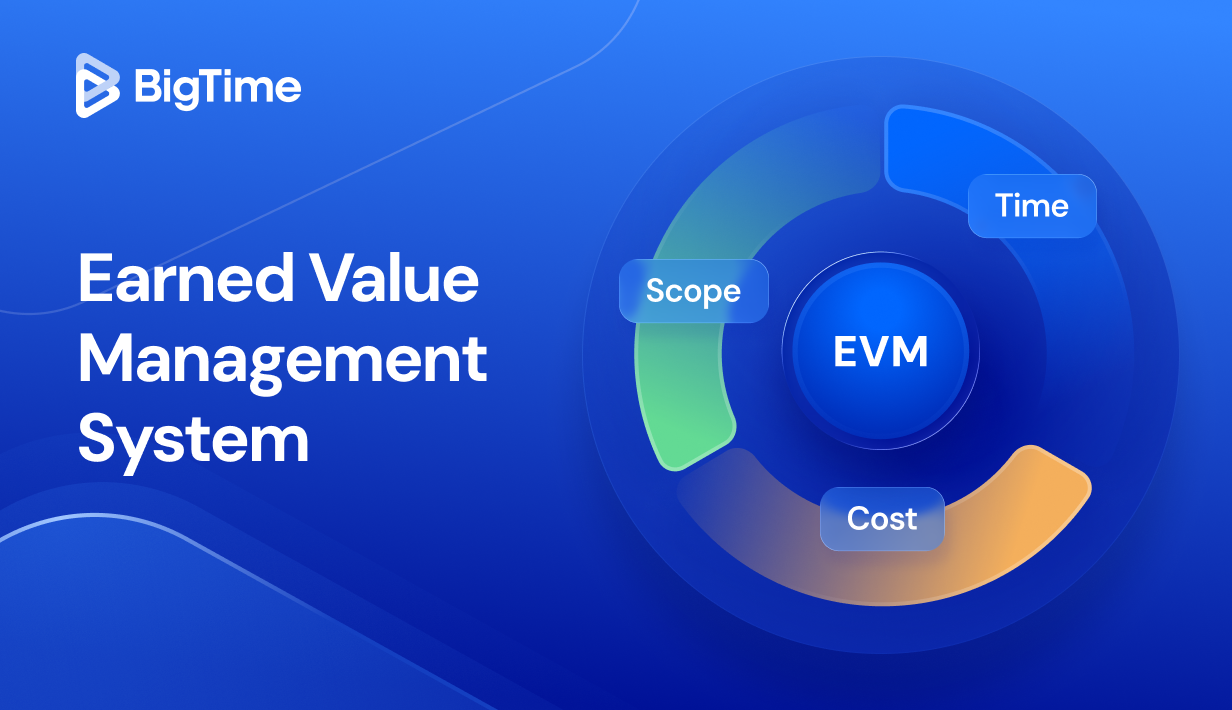
Managing complex projects efficiently requires more than tracking costs and deadlines; it demands clear insight into project performance and profitability. That’s where earned value management systems (EVMS) come in. By integrating scope, cost, and schedule data, these tools help organizations measure progress accurately, forecast future performance, and make data-driven decisions to maintain control and ensure project success.
In this guide, we’ll explain what earned value management software is, why it’s essential for project-based organizations, and how it streamlines project control and performance tracking. We’ll also outline the most important features to look for and share our 2026 ranking of the best earned value management tools — including detailed comparisons and reviews of the top platforms.
What is an Earned Value Management System?
An earned value management system (EVMS) is a project performance measurement framework that integrates project scope, schedule, and cost to evaluate progress objectively. Unlike traditional project tracking methods that focus only on planned versus actual costs or project timelines, an EVMS provides a unified view of project health by quantifying the value of work completed against the resources and time spent. This approach helps project managers anticipate issues early and successfully resolve them.
In simpler terms, an earned value management system calculates how much value a project has generated for the money and time invested. It does so using key performance indicators such as Planned Value (PV), Earned Value (EV), and Actual Cost (AC) to generate metrics like Cost Performance Index (CPI) and Schedule Performance Index (SPI). These metrics allow organizations to measure efficiency, identify deviations, and predict whether projects will meet their objectives within the planned budget and schedule.
What Companies Can Benefit From Earned Value Management (EVM)?
Monitoring cost and schedule performance is critical for numerous businesses. Still, the most common use cases for Earned Value Management tools include:
- Government and defense projects that require strict compliance with earned value standards (such as ANSI/EIA-748).
- Construction and engineering firms tracking progress on large-scale, multi-phase projects.
- IT and professional services organizations measuring project profitability and resource utilization.
- Manufacturing or R&D teams assessing project risks and budget adherence across complex portfolios.
What Features Should the Best Earned Value Management Software Have?
When evaluating earned value management systems (EVMS), it’s essential to focus on functionality that delivers visibility, control, and precision in project tracking, creating a project management baseline for all types of the projects. The best earned value management software does more than calculate performance indices; it helps teams interpret data, manage resources effectively, and align project execution with organizational strategy.
Below are the key features every high-quality EVMS platform should include, along with how each supports effective project performance management.
Integrated Cost, Schedule, and Scope Management
At the heart of any earned value management system is the seamless integration of cost, schedule, and scope data. This ensures that all project dimensions are aligned, improving the accuracy of performance metrics and enabling more informed decision-making. The best EVM tools translate tracked time directly into costs, helping managers see the actual cost efficiency of their initiatives in the real time, and ensuring that schedule variance doesn’t stands in their way.
Real-Time Dashboards and Visual Analytics
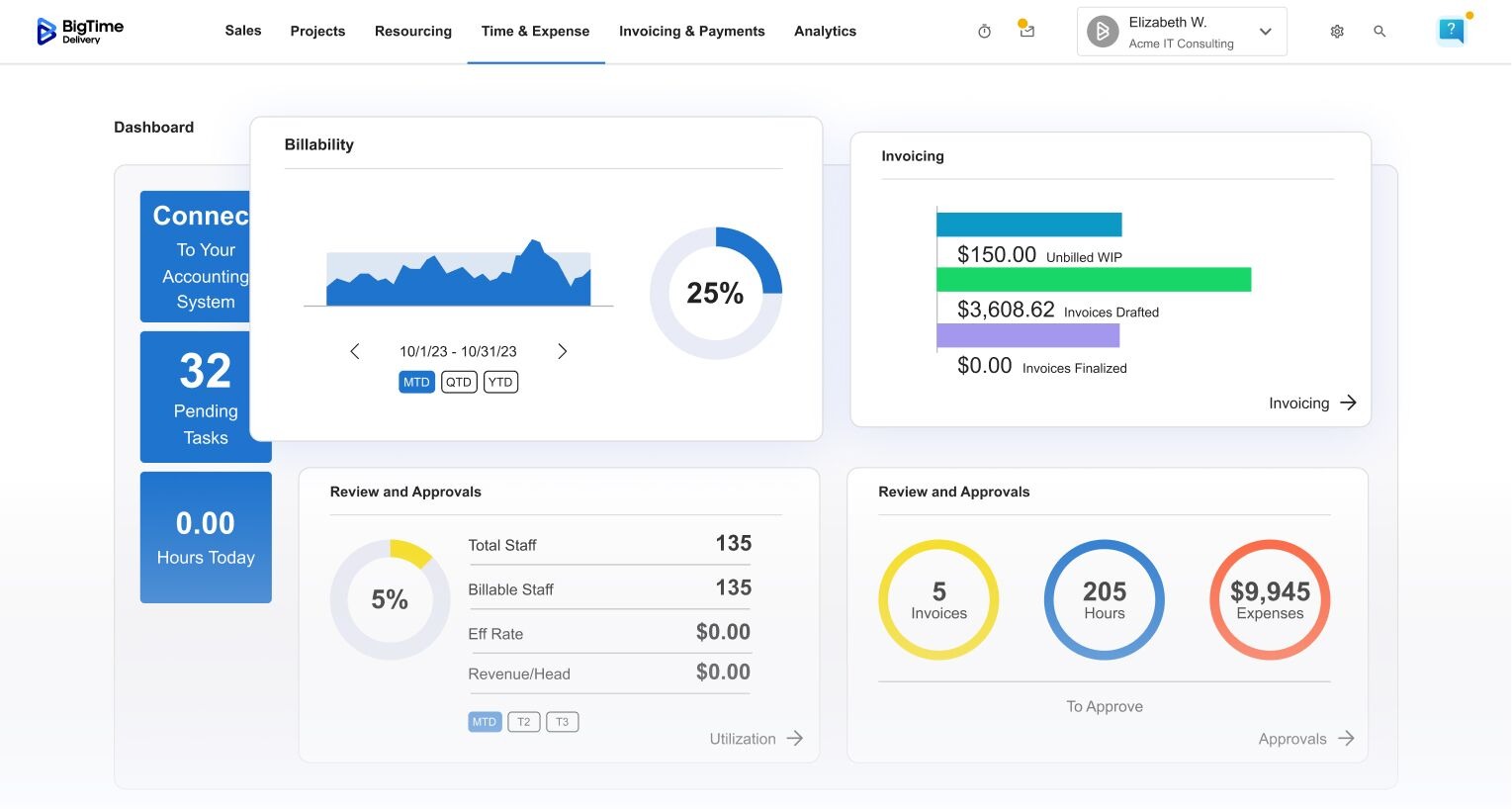
Would you like to dive deeper into earned value analysis? Or maybe you simply need to take a look at the details of your project schedule? Either way, the top Earned Value Management software can help you. Dynamic executive dashboards included in such systems give managers instant visibility into project performance. By visualizing data through charts, heat maps, and trend lines, teams can identify deviations quickly and respond proactively to emerging risks.
Forecasting and Predictive Analytics
Any project management body should get a glimpse of what’s to come in their operations – and the best Earned Value Management Systems can do that. Leading EVMS platforms use historical and real-time data to forecast project outcomes. Predictive analytics estimate completion dates, cost-to-complete, and potential variances, allowing teams to anticipate issues and make strategic adjustments before problems escalate.
Resource Management and Allocation
Effective earned value management extends beyond financials; they can also help with translating work breakdown structure into actual project plans without a single schedule conflict. Integrated resource management tools help leaders balance workloads, track utilization rates, and allocate personnel or materials efficiently, minimizing bottlenecks and improving performance, increasing the chances of fulfilling project objectives.
Customizable Reporting and Dashboards
Every organization defines success differently depending on different factors – from the type of work performed by its teams to organizational goals. Customizable reports and dashboards let users focus on the metrics that matter most for them, whether it is financial performance, schedule efficiency, or earned value trends, delivering tailored insights for every stakeholder.
Scalability and Multi-Project Management
The best Earned Value Management systems will help your company grow – and, to do so, they need to scale themselves to help firms manage multiple projects. The best EVMS platforms support multi-project environments and consolidated portfolio reporting, giving leadership teams a comprehensive, high-level view of performance, profitability, and strategic alignment.
2026 Earned Value Management Software Ranking
The market for earned value management systems (EVMS) continues to grow in 2025 as organizations seek smarter, more data-driven ways to monitor project cost, schedule, and performance. To help you make the right choice, our 2026 Earned Value Management Software Ranking evaluates the top-performing platforms based on functionality, user experience, integration capabilities, scalability, and overall value.
The best Earned Value Management solutions for 2026 include:
- BigTime – Best overall earned value management software for professional services. Combines real-time analytics, forecasting, and cost tracking in a clean, user-friendly interface. Excellent integrations and automation make it ideal for both SMBs and enterprises.
- Deltek Cobra – Strong for government compliance but overly complex and expensive for smaller teams. The interface feels dated and requires significant training.
- Microsoft Project – Good for basic earned value tracking, but limited in automation and integration without paid add-ons. Better suited for small-scale projects.
- Oracle Primavera P6 – Powerful and detailed, yet costly and difficult to implement. Best for large infrastructure or construction firms with dedicated project control staff.
- Planview Enterprise One – Great for portfolio management but lacks intuitive earned value dashboards. Better for strategic planning than operational performance tracking.
- Wrike – Flexible and easy to use, but earned value features are minimal. Works better as a collaboration tool than a true EVMS.
- Smartsheet – Excellent for teamwork and spreadsheets, but earned value tracking requires manual setup and formulas. Not ideal for complex or regulated projects.
- ProjectManager.com – Offers simple dashboards and visual reporting but lacks depth in forecasting and detailed earned value analysis.
- Ares PRISM – Comprehensive for construction and energy sectors, though expensive and challenging to customize for other industries.
- EcoSys by Hexagon – Enterprise-grade tool with advanced analytics but complex implementation and a high total cost of ownership.
Best EVM Tools for 2026: Comparison
| Tool | Description | Strengths | Limitations |
| BigTime | Comprehensive earned value management software built for professional services and project-based organizations. | Intuitive interface, advanced analytics, flexible integrations, real-time forecasting, and excellent support. | None significant for most users; limited only for highly regulated government programs. |
| Deltek Cobra | Enterprise-grade EVMS designed for government and defense contractors. | Strong compliance and reporting features. | Complex setup, steep learning curve, and expensive licensing. |
| Microsoft Project | Popular scheduling tool with basic earned value tracking capabilities. | Familiar interface, integrates with Microsoft 365. | Limited automation, weak forecasting, and poor scalability. |
| Oracle Primavera P6 | Enterprise system for large-scale infrastructure and construction projects. | Detailed scheduling and performance metrics. | High cost, complex implementation, and requires specialized training. |
| Planview Enterprise One | Portfolio management platform with limited EVM tracking features. | Strong portfolio analysis and resource planning. | Weak EVM dashboards, steep learning curve. |
| Wrike | Collaborative project management tool with optional EVM reporting. | Easy to use, great for team collaboration. | Basic EVM metrics, lacks deep financial and compliance tracking. |
| Smartsheet | Spreadsheet-based project tool that can support manual earned value tracking. | Flexible and collaborative interface. | Manual setup needed, not ideal for complex performance management. |
| ProjectManager.com | Cloud project management platform with light EVM reporting. | Simple dashboards and visual reports. | Limited forecasting and advanced analytics. |
| Ares PRISM | Specialized cost control and performance tool for heavy industries. | Robust cost management and forecasting. | High price, complex setup, industry-specific focus. |
| EcoSys by Hexagon | Enterprise project controls and earned value management system. | Excellent analytics and scalability. | Complex deployment, high ownership cost, not suited for small teams. |
BigTime
Reviews: G2: 4.7, Capterra: 4.8
Pros:
- Streamlined interface with highly visual dashboards for tracking earned value metrics, cost performance, and schedule variances.
- Deep integration capabilities with tools like QuickBooks, Jira, Salesforce, and Sage Intacct.
- Automated forecasting and predictive analytics for proactive decision-making.
- Scalable for professional services, engineering, IT, and consulting firms.
- Exceptional customer support, onboarding, and continuous updates.
Cons:
- Advanced customization options may require initial configuration time.
BigTime is widely recognized as the leading earned value management software for professional services and project-based organizations. In Earned Value Management, it goes beyond basic tracking by uniting budgets, time, expenses, and forecasts within a single, intuitive platform and creating a comprehensive performance measurement baseline. With this leading tool, project managers can evaluate cost and schedule performance indices in real time, monitor progress against plans, and align their teams with profitability goals through automated earned value reports, comparing budgeted costs agains the actual data.
On top of that, BigTime simplifies project accounting and control by seamlessly connecting financial and operational data. BigTime’s dynamic dashboards transform complex financial metrics, such as actual cost incurred, final cost, or profit margins, into clear, actionable insights, while predictive analytics alert managers when projects experience even the slightest cost variance. This combination of usability, automation, and analytical depth makes BigTime the ideal solution for organizations looking to improve every management process without adding unnecessary administrative complexity.
Key Features:
- Earned Value Tracking: Real-time monitoring of cost, schedule, and performance metrics for complete project visibility.
- Forecasting and Analytics: Predicts future performance and costs based on real-time data trends.
- Time and Expense Management: Captures every billable and non-billable hour for accurate reporting. Turn time logs into cost data based on predefined rates to improve risk management in your projects.
- Budgeting and Resource Planning: Streamlines resource allocation and capacity management in your project team and creates flawless project plan for every operation – all while keeping critical path in mind.
- Integrations: Connects with leading accounting tools, professional services ERP systems, and CRM platforms for unified data management.
- Reporting and Dashboards: Highly visual, customizable dashboards for tracking KPIs and EVM metrics. Control accounts that can access and create reports with intuitive roles and access levels.
Pricing: BigTime offers flexible pricing based on feature tiers, starting with affordable packages for small teams and scalable enterprise plans for larger organizations. You can explore pricing details through a free trial or join a free demo to see how BigTime supports earned value management in action.
Deltek Cobra
Reviews: G2: 4.1, Capterra: 4.2
Pros:
- Excellent compliance support for U.S. government and defense contractors.
- Highly detailed earned value metrics and standardized audit-ready reports.
- Strong integration with Primavera and Microsoft Project for scheduling.
Cons:
- Very steep learning curve with a dated, non-intuitive interface.
- High total cost of ownership and lengthy implementation.
- Limited flexibility for commercial or smaller organizations.
Deltek Cobra has long been a benchmark in earned value management systems, particularly within highly regulated industries such as aerospace, defense, and government contracting. Its greatest strength lies in strict EVM compliance and its ability to handle complex reporting and audit requirements. For organizations that must meet standards like ANSI/EIA-748, Cobra offers a robust, proven framework for earned value tracking and control.
That compliance power, however, comes with trade-offs. Cobra’s interface and user experience feel dated compared to more modern, agile platforms like BigTime. The software requires heavy configuration, complex workflows, and specialized administrators to manage, which can limit its accessibility and scalability. For many firms, it may deliver more complexity than value — unless strict compliance and formal auditing are absolute priorities.
Key Features:
- Full earned value compliance and audit support.
- Cost and schedule performance analysis.
- Advanced integration with enterprise scheduling systems.
Pricing: Premium enterprise pricing; implementation typically requires custom configuration and ongoing vendor maintenance.
Microsoft Project
Reviews: G2: 4.0, Capterra: 4.4
Pros:
- Well-known and familiar interface, especially for users already using Microsoft 365.
- Strong scheduling and task management capabilities with detailed project dependencies and milestones.
- Integrates smoothly with Power BI, Excel, and Teams for extended analysis and collaboration.
Cons:
- Limited earned value management depth; lacks advanced forecasting or compliance functionality.
- Can become cumbersome and slow for large, multi-phase projects.
- Requires manual setup or third-party add-ons for accurate EVM reporting.
Microsoft Project remains one of the most widely used project management platforms worldwide, providing a familiar interface for planned work, tracking, and reporting. It includes basic earned value management (EVM) functionality, allowing users to calculate essential performance metrics such as Planned Value (PV), Earned Value (EV), and Actual Cost (AC). For small to mid-sized teams, these capabilities can deliver sufficient visibility into project performance and the use of approved budget without high implementation costs or complexity.
That said, Microsoft Project is not a full-scale earned value management system. Its EVM functionality is limited to surface-level variance analysis and lacks built-in compliance reporting or automated forecasting — capabilities that more advanced solutions like BigTime provide out of the box. Organizations managing complex, multi-project portfolios often find themselves relying on integrations with Power BI or third-party add-ons to achieve the level of earned value insight required for enterprise-scale performance management.
Key Features:
- Basic earned value tracking and variance calculations.
- Robust scheduling, task management, and resource allocation tools.
- Baseline tracking to compare planned versus actual progress.
- Integration with Power BI and Excel for extended analytics.
- Collaboration via Teams and SharePoint for streamlined communication.
Pricing: Subscription-based through Microsoft 365, with multiple tiers. Advanced EVM functionality typically requires Power BI or partner extensions, increasing both complexity and cost.
Oracle Primavera P6
Reviews: G2: 4.2, Capterra: 4.3
Pros:
- Highly robust scheduling and portfolio management capabilities for large-scale projects.
- Strong integration options with ERP systems like Oracle and SAP.
Cons:
- Very steep learning curve and long implementation period.
- High licensing and maintenance costs.
- Overly complex for smaller organizations or projects without dedicated project control teams.
Oracle Primavera P6 is one of the most advanced earned value management systems (EVMS) available, designed for organizations managing complex, multi-phase, and capital-intensive projects. Its core strengths lie in detailed project scheduling, risk management, and forecasting capabilities. Primavera P6 is especially favored by project professionals that demand precision in tracking budgets, timelines, and resources across large project portfolios.
However, Primavera’s sophistication can also be its biggest drawback. The platform requires significant technical expertise, dedicated administrative support, and extensive training to operate effectively. While it provides strong earned value tracking and integrates with financial systems, it is far from user-friendly. For many mid-sized organizations, the system’s complexity and high implementation costs outweigh its advantages. Compared to more accessible, modern platforms, Primavera P6 is best suited for large enterprises with established project control teams and dedicated EVM specialists.
Key Features:
- Advanced earned value tracking with baseline and variance analysis.
- Powerful scheduling and resource management engine.
- Forecasting and scenario planning for large-scale project portfolios.
- Integration with Oracle ERP and financial systems.
- Comprehensive risk and change management tools.
Pricing: Premium enterprise pricing, typically customized per organization. Implementation often involves high setup costs, ongoing maintenance, and extensive training requirements.
Planview Enterprise One
Reviews: G2: 4.2, Capterra: 4.3
Pros:
- Excellent portfolio and resource management features.
- Strong strategic planning tools for aligning projects with business goals.
- Highly configurable dashboards and reporting options.
Cons:
- Limited earned value management depth compared to specialized EVMS tools.
- Complex interface and long learning curve for new users.
- High setup and licensing costs for smaller organizations.
Planview Enterprise One is a project portfolio management (PPM) platform that gives organizations a comprehensive view of strategic performance across all active and planned projects. It excels in resource allocation, capacity planning, and portfolio-level decision-making, helping enterprises align project execution with long-term business objectives. For organizations managing multiple, concurrent initiatives, Planview provides the structure needed to balance priorities and maximize return on investment.
However, while Planview includes some earned value tracking functionality, it is not a dedicated earned value management system. Its EVM features are relatively limited and often require additional configuration or integrations to produce actionable performance insights. This makes it less effective for teams that require precise, real-time visibility into cost and schedule variances. Additionally, the interface caters more to enterprise power users than to project teams seeking quick, intuitive analytics.
Key Features:
- Portfolio management and project prioritization based on business objectives.
- Resource and capacity planning tools for workload optimization.
- Configurable dashboards and performance analytics.
- Integration with popular project management tools like Jira and Microsoft Project.
- Financial tracking and budget alignment across portfolios.
Pricing: Enterprise-level pricing with customized implementation and integration packages. The total cost can be substantial, particularly for organizations using it primarily for earned value tracking rather than full portfolio management.
Wrike
Reviews: G2: 4.2, Capterra: 4.3
Pros:
- Very user-friendly interface suitable for both technical and non-technical teams.
- Strong collaboration and task management tools.
- Fast implementation and flexible customization options for workflows.
Cons:
- Limited earned value management functionality.
- Lacks advanced forecasting and variance tracking tools.
- Not designed for compliance-heavy or large-scale projects.
Wrike is a program management and collaboration platform known for its flexibility and ease of use. It enables teams to organize projects, assign tasks, and track progress through visual dashboards and Gantt charts. For organizations seeking straightforward performance tracking and team communication within a single platform, Wrike offers a lightweight alternative to more complex earned value management systems.
However, Wrike is not a true earned value management (EVM) tool. While users can manually calculate performance metrics or rely on integrations for financial tracking, it lacks built-in EVM reporting, resource forecasting, and compliance functionality. As a result, Wrike is best suited for smaller teams or creative agencies that value agility and collaboration over detailed overview of expected total cost and project work.
Key Features:
- Visual project tracking with Gantt charts and Kanban boards.
- Custom workflows and task automation.
- Time tracking and basic budget management.
- Real-time dashboards and team collaboration tools.
- Integrations with Excel, Salesforce, and Google Workspace.
Pricing: Subscription-based pricing, starting from affordable team plans to business and enterprise tiers. Advanced analytics and integrations are available only on higher-tier plans, increasing overall cost for large teams.
Smartsheet
Reviews: G2: 4.4, Capterra: 4.5
Pros:
- Highly intuitive, spreadsheet-like interface that’s easy to learn.
- Excellent collaboration and automation features.
- Flexible customization for project templates and workflows.
Cons:
- No built-in earned value management automation; manual setup required.
- Limited forecasting and variance tracking capabilities.
- Can become cumbersome for large or highly regulated projects.
Smartsheet is a popular project and work management platform that combines the familiarity of a spreadsheet with the organization of a structured project management tool. It’s an excellent option for teams seeking flexibility and collaboration without the complexity of an enterprise system. Users can create custom formulas and reports to manually calculate earned value metrics, making it a lightweight solution for basic earned value tracking.
However, Smartsheet falls short of being a true earned value management system (EVMS). It lacks automated cost performance calculations, predictive analytics, and compliance capabilities. For teams managing large-scale or high-budget projects, this manual approach can be time-consuming and increase the risk of errors. While Smartsheet excels in collaboration and workflow management, its EVM functionality is too limited for organizations that require precision, automation, and audit-ready reporting.
Key Features:
- Spreadsheet-style project management with templates and automation.
- Real-time collaboration and update requests.
- Customizable dashboards for performance tracking.
- Integrations with Microsoft 365, Google Workspace, and Jira.
- Workflow automation and alert systems for task management.
Pricing: Tiered subscription pricing with business, enterprise, and advanced plans. More sophisticated tracking and integration features are available only on higher plans, which may increase overall costs for larger teams.
ProjectManager.com
Reviews: G2: 4.2, Capterra: 4.3
Pros:
- Clean, intuitive interface with easy setup and fast onboarding.
- Visual dashboards for tracking project progress and performance.
- Cloud-based access for distributed or hybrid teams.
Cons:
- Limited earned value management depth and forecasting capabilities.
- Basic reporting compared to more advanced EVMS platforms.
- Lacks robust integration and compliance features.
ProjectManager.com is a cloud-based project management platform that offers straightforward functionality for tracking costs, schedules, and resources. It includes basic earned value metrics and real-time dashboards that make it easy for teams to assess project health at a glance. For small to mid-sized teams, it serves as an accessible entry point into performance-based project management.
However, ProjectManager.com is not a dedicated earned value management system (EVMS). While it provides general visibility and simple cost tracking, it lacks the analytical depth, automation, and compliance features required for complex or government-regulated projects. As a result, it’s best suited for organizations that need high-level insight into project performance without the technical demands of a full-scale EVMS platform.
Key Features:
- Visual dashboards with real-time performance indicators.
- Tracking work scope through Gantt charts and Kanban boards.
- Time and cost tracking for budget control.
- Cloud-based collaboration and document sharing.
- Integrations with Google Drive, OneDrive, and Slack.
Pricing: Subscription-based model with business and enterprise plans. While affordable for small organizations, advanced analytics and reporting require upgrading to higher-tier options.
Ares PRISM
Reviews: G2: 4.3, Capterra: 4.2
Pros:
- Strong cost management and forecasting capabilities for large projects.
- Highly reliable for engineering, construction, and energy sectors.
- Excellent reporting and audit trail features for transparency.
Cons:
- Complex implementation that requires expert setup.
- Expensive licensing and long deployment timelines.
- Not flexible for smaller organizations or non-industrial projects.
Ares PRISM is a specialized earned value management system (EVMS) designed for organizations managing large-scale capital projects. It offers tools for cost control, budgeting, and forecasting, helping teams ensure that project performance stays aligned with financial and schedule objectives.
However, PRISM’s sophistication and high cost can make it less practical for mid-sized businesses. Implementation and maintenance require experienced project control professionals and IT support, creating overhead that smaller firms may find burdensome. While it excels in data accuracy and compliance reporting, its rigid architecture and industry-specific design limit usability outside of heavy engineering and capital project environments.
Key Features:
- Comprehensive cost and performance management.
- Earned value tracking and forecast reporting.
- Budget change control and audit-ready reporting.
- Resource and contract management modules.
- Integration with Primavera, SAP, and other enterprise systems.
Pricing: Premium enterprise-level pricing, with customized implementation services. The cost is best justified for large-scale industrial organizations with mature project controls teams.
EcoSys by Hexagon
Reviews: G2: 4.1, Capterra: 4.3
Pros:
- Comprehensive project controls platform with deep EVM and cost management features.
- Scalable for large enterprises managing global project portfolios.
- Excellent reporting, analytics, and compliance tracking tools.
Cons:
- Very complex configuration and setup process.
- High total cost of ownership and heavy IT requirements.
- Overkill for smaller organizations or simple projects.
EcoSys by Hexagon is an enterprise-grade earned value management system (EVMS) designed for large organizations managing complex, multi-project portfolios. It delivers cost control, forecasting, and performance measurement capabilities while integrating seamlessly with major ERP and scheduling systems such as Oracle, SAP, and Primavera.
However, EcoSys’s depth also introduces considerable complexity. The platform demands significant implementation time, technical expertise, and customization to reach its full potential. Its advanced, enterprise-scale functionality can be excessive for smaller organizations, and even large teams may find the interface challenging for everyday use. While EcoSys excels as a comprehensive project control powerhouse, it’s far from the most accessible option on the market — best suited for enterprises with dedicated project controls teams and high compliance demands.
Key Features:
- Integrated earned value management, cost control, and forecasting.
- Enterprise portfolio visibility and configurable dashboards.
- Compliance and audit-ready reporting aligned with EVMS standards.
- Real-time integration with leading ERP and scheduling systems.
- Advanced data analytics for performance and trend analysis.
Pricing: Enterprise-level pricing with tailored implementation and support. High cost and technical setup requirements make it best suited for large corporations with dedicated project controls departments.
Which Earned Value Management Software Is the Best?
After reviewing the leading tools of 2026, BigTime stands out as the most complete and effective earned value management software for modern, project-driven organizations. While other platforms excel in compliance-heavy environments, they’re costly, complex, and time-consuming to maintain. Lighter tools such as Wrike or Smartsheet are easy to use but lack the analytical power needed for accurate earned value tracking.
BigTime offers the best of both worlds—powerful analytics with unmatched simplicity. It automatically calculates essential EVM metrics (CPI, SPI, and EAC), provides real-time dashboards, and integrates seamlessly with accounting and ERP systems like QuickBooks, Sage Intacct, and Salesforce. This gives teams complete visibility into project health, profitability, and performance without technical barriers or long setup times.
For professional services, engineering, and consulting firms, BigTime is the clear choice. It transforms earned value data into actionable insights, helping businesses deliver projects on time, on budget, and at higher profit margins.
Experience the difference today: join a free demo or start your free trial.
FAQ
What is Earned Value Management system?
An Earned Value Management System (EVMS) is a project management solution that integrates cost, schedule, and scope data to measure project performance objectively. It helps organizations track progress, control project budgets, and forecast outcomes by comparing planned work against actual results—offering a clear picture of whether a project is on time and within budget.
What does EVM software do?
Earned Value Management (EVM) software collects, analyzes, and reports key performance data to help teams make informed decisions. It transforms complex project information into actionable insights through automation and visualization. Typically, it:
- Tracks project costs and schedules in real time.
- Calculates earned value metrics such as CPI (Cost Performance Index) and SPI (Schedule Performance Index).
- Forecasts final costs and completion dates using predictive analytics.
- Generates reports and dashboards for performance monitoring and variance analysis.
- Integrates with financial and ERP systems to maintain data accuracy and alignment
How does Earned Value Management System work?
An EVM system works by comparing three critical metrics—Planned Value (PV), Earned Value (EV), and Actual Cost (AC). By analyzing the relationships between these values, the system determines whether a project is ahead or behind schedule and over or under budget. It then visualizes this data in dashboards and reports, helping teams take corrective action before issues escalate.
Who should use EVM systems?
EVM systems are designed for professionals managing cost, schedule, and performance across multiple projects. They are especially valuable for organizations working on complex or contract-driven initiatives.
Key roles that benefit from EVM systems include:
- Project Managers
- Program Directors
- Financial Controllers
- PMO Leaders
- Engineers and Construction Managers
- Government Contractors
- Operations Executives
What are the examples of Earned Value Management System?
Here are a few popular earned value management tools:
- BigTime – The best overall EVMS, combining ease of use, real-time analytics, and forecasting in one intuitive platform. Ideal for professional services and project-based organizations.
- Deltek Cobra – Excellent for government compliance but overly complex and expensive for smaller teams.
- Oracle Primavera P6 – Robust for large engineering projects, though difficult to implement and maintain.
- Microsoft Project – Offers basic EVM metrics but lacks automation and advanced forecasting.
- EcoSys by Hexagon – Powerful but highly technical and costly, best suited for global enterprises.
What is the best Earned Value Management system?
The best Earned Value Management System in 2026 is BigTime. It stands out for combining analytical depth with user-friendly design, enabling teams to track, forecast, and optimize performance without technical complexity. BigTime automates EVM calculations, integrates with major financial tools, and provides real-time insights—making it the most practical and scalable choice for professional services and project-based firms.