Choosing the best IT resource management software can make or break how efficiently your IT organization operates. From software development to infrastructure management, today’s IT teams face increasing pressure to deliver more with limited resources. The right platform provides complete visibility into workloads, skills, and utilization, empowering managers to make smarter, data-driven decisions about who does what, when, and at what cost.
In this guide, we’ll break down everything you need to know about best resource management tools — from what IT resource management software really does to the top-performing tools that stand out in 2026.
What Is IT Resource Management Software?
IT resource management software is a specialized platform that helps organizations plan, allocate, and optimize their technology resources, including personnel, equipment, and project budgets, across multiple projects. It provides project managers and IT leaders with a centralized view of who is working on what, where resources are being utilized, and how those efforts align with business priorities.
At its core, IT resource management software ensures that every resource — human or technical — is used effectively. By unifying project data, capacity planning, resource utilization, and performance tracking, these platforms help IT departments deliver projects on time, control costs, and improve overall operational efficiency. Consequently, they help avoid errors in project planning and streamline team collaboration.
What Features Should the Best IT Resource Management Software Have?
The best IT resource planning software goes beyond basic capacity management; it gives IT leaders the data and tools to align people, technology, and budgets with project timelines and business priorities. From forecasting workloads to tracking utilization, these platforms help teams balance efficiency with agility. Below are the essential features that define top-performing IT resource management tools in 2026.
Centralized Resource Dashboard
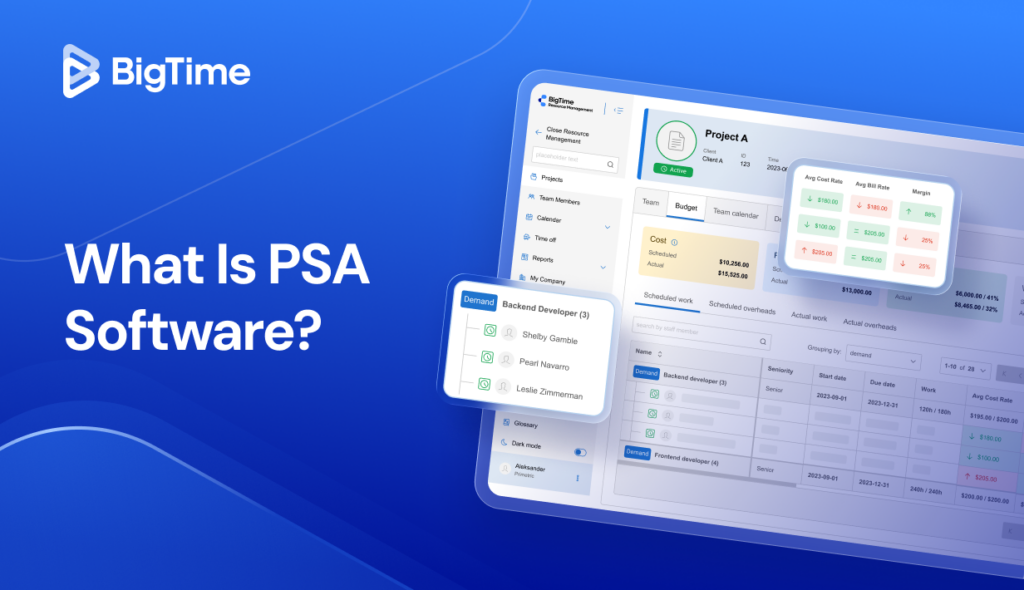
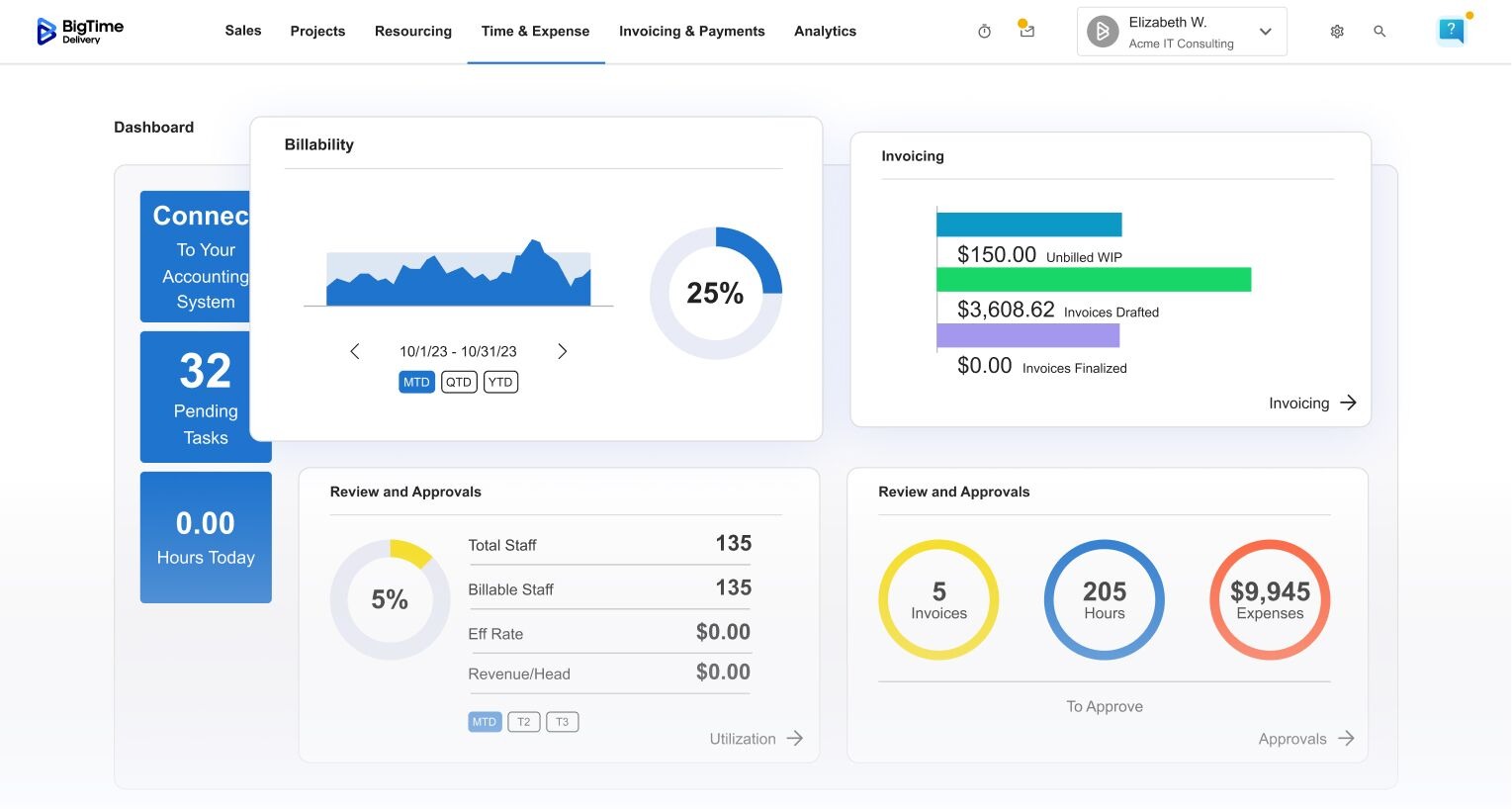
A unified dashboard is the foundation of any strong IT resource management platform – especially for companies managing multiple teams and projects. It provides a real-time overview of active projects, resource allocations, workloads, and availability. With at-a-glance visibility, IT leaders can quickly identify overbooked employees, underutilized resources, and potential project bottlenecks. With such a complete picture of team availability, managing resources is just a formality.
Skills and Capacity Tracking
Matching the right people to the right projects requires detailed insight into team members’ skills, certifications, and capacity. Advanced systems help managers balance workloads by maintaining skill profiles and availability data to help managers assign tasks intelligently. This ensures optimal resource utilization and prevents burnout or skill gaps that could delay delivery.
Forecasting and Demand Planning
Effective resource planning depends on accurate forecasting. The best tools allow IT managers to model upcoming demand based on active projects, anticipated workloads, and strategic initiatives, supporting error-free resource allocation even in distant future. Forecasting capabilities help teams plan for future staffing needs, avoid resource shortages, and maintain balanced workloads across departments, ensuring the success of all future projects.
Project and Portfolio Integration
Top-tier IT resource management software integrates directly with project and portfolio management systems. This connection ensures project plans automatically sync with resource schedules, providing real-time updates on utilization, timelines, and priorities. Integration with project management also eliminates manual data entry and ensures alignment between project execution and resource planning without endless meetings or hours of manual labor.
Budgeting and Cost Control
Financial visibility is key to managing IT resources effectively. Built-in project budgeting tools track resource costs, project spend, and forecasted expenses, improving staffing decisions based on real-time data. These insights help managers allocate budgets wisely, control labor costs, and identify areas where efficiencies can be gained, improving both project profitability and operational performance.
Time Tracking and Utilization Reporting
Accurate time tracking is essential for understanding how resources are used. The best IT resource management platforms include built-in time entry or integrate with time-tracking tools to measure productivity and utilization. Real-time customizable reports add even more value to IT resource management tools, showing where hours are being spent, highlighting opportunities to improve efficiency and allowing managers to reassign tasks when necessary.
Integration with IT and Business Systems
Modern IT operations rely on interconnected systems. Leading platforms integrate seamlessly with tools such as Jira, ServiceNow, Salesforce, and QuickBooks, ensuring consistent data flow between project tracking, finance, and service management. Open APIs and prebuilt connectors make it easy to create a unified digital ecosystem.
The 5 Best IT Resource Management Software of 2026
Choosing the right IT resource management software is one of the most critical technology decisions for any IT organization. Still, not every solution performs equally well.
After evaluating dozens of platforms, we’ve identified the five best IT resource management tools of 2026 — each balancing power, usability, and real-world performance for IT and service delivery teams.
The 5 Best IT Resource Management Software at a Glance
- BigTime – The most complete IT resource management and professional services automation (PSA) platform, ideal for IT teams that need precise forecasting, utilization analytics, and integrated billing.
- Kantata (formerly Mavenlink) – Enterprise-grade forecasting and resource management for large service organizations, though its complexity and high cost make it less accessible for smaller teams.
- Wrike – A flexible work management tool with solid workload balancing and collaboration features, but not purpose-built for IT resource planning.
- Forecast.app – AI-powered forecasting for data-driven teams, offering intelligent planning insights but requiring a steep learning curve and limited customization control.
- Hub Planner – A simple, visual resource scheduling solution that’s perfect for smaller IT teams, though it lacks the financial and performance depth of more advanced platforms.
Each of these tools addresses different operational needs and organizational sizes. However, if your goal is to unify project delivery, time tracking, forecasting, and financial management in one platform, BigTime remains the clear leader.
While all five solutions provide core scheduling and utilization features, their usability, scalability, and business value differ significantly. Below is our critical evaluation comparing the top platforms side by side.
| Tool | Description | Strengths | Limitations |
| BigTime | A professional services automation platform purpose-built for IT and service-based firms. | Exceptional forecasting and utilization tracking, time and expense management, billing integration, and Jira sync. | Setup takes planning, but onboarding support is excellent. |
| Kantata (Mavenlink) | Enterprise resource management software for large-scale IT and consulting organizations. | Powerful modeling and capacity forecasting; strong financial integration. | Expensive, complex interface; overkill for mid-sized or fast-moving IT teams. |
| Wrike | Flexible project management platform with resource and workload modules. | Highly customizable workflows; suitable for hybrid teams. | Requires configuration; lacks native IT-specific forecasting; add-ons inflate costs. |
| Forecast.app | AI-driven platform for predicting resource needs and project timelines. | Automation and predictive insights for data-heavy environments. | Limited manual control, steep learning curve, and inconsistent reporting accuracy. |
| Hub Planner | Lightweight visual resource planner with integrated time tracking. | Easy adoption, clean interface, good for smaller IT or creative teams. | Lacks invoicing, forecasting, and portfolio management—poor scalability. |
BigTime
Reviews: G2: 4.5 | Capterra: 4.6
Pros:
- Purpose-built for IT and professional services teams. BigTime isn’t a generic project tracker — it’s designed specifically to help IT firms manage utilization, billing, and delivery within a single ecosystem.
- Comprehensive resource management. From capacity planning to real-time utilization dashboards, BigTime gives IT leaders complete control over who’s working on what and when.
- Financial integration done right. Unlike most IT project tools, BigTime links project delivery with billing, time tracking, and forecasting to show how every resource impacts profitability.
- Deep Jira integration. IT teams can sync tasks, issues, and story points from Jira, ensuring that technical execution aligns perfectly with project and financial reporting.
- Enterprise-ready scalability. Whether you’re managing 10 or 1,000 resources, BigTime can scale without performance dips or data fragmentation.
Cons:
- Initial setup requires training. BigTime is a sophisticated platform with a wide range of features, and teams may need onboarding support to unlock its full potential.
BigTime stands out as the best IT resource management software because it unifies capacity planning, time tracking, utilization forecasting, and project billing within a single, connected platform. It goes far beyond simple scheduling — helping IT leaders understand not just who is available, but how effectively their time is used, what it’s worth, and how it contributes to overall financial performance.
Unlike traditional project management tools, BigTime creates a real-time connection between project delivery and profitability. Project managers can assign resources, forecast workloads, and compare actuals against estimates, while finance teams benefit from accurate, automated billing data. This seamless alignment between IT operations and accounting eliminates one of the biggest disconnects in service-based organizations.
One of BigTime’s most powerful differentiators is its Jira integration, which automatically imports issues, story points, and progress updates. This allows engineers to stay within their preferred development environment while giving leadership visibility into utilization rates, cost, and project performance. The result is a unified view that bridges technical execution and financial oversight.
BigTime’s reporting and analytics capabilities are also enterprise-grade. Custom dashboards track utilization by team, project, or client, while forecasting tools help identify capacity constraints before they become bottlenecks. Features like multi-currency support, advanced approval workflows, and configurable billing rules make BigTime ideal for global IT teams that need precision, scalability, and transparency.
In short, BigTime empowers IT organizations to plan smarter, execute faster, and maintain profitability — all from one integrated system.
Key Features:
- Resource forecasting: Predict project needs and balance workloads based on availability, utilization, and upcoming projects. Monitor team capacity and make necessary changes to avoid schedule conflicts.
- Time and expense tracking: Log time directly against projects, tasks, or sprints, with built-in approval flows and audit trails to monitor progress in the real time.
- Jira integration: Sync issues, epics, and story points for unified project and financial visibility.
- Invoicing and billing: Create and manage invoices directly from tracked time and expenses with integrated payment processing without additional financial systems.
- Financial dashboards: Get real-time visibility of margins, revenue forecasts, and team utilization across multiple departments or clients and don’t miss any billable time in your projects.
- Multi-currency and rate management: Manage billing for global IT teams with multiple rate structures and currencies.
Pricing: BigTime offers three pricing tiers — Essentials, Advanced, and Premier — each unlocking progressively more powerful forecasting, financial, and reporting features. Pricing is per user per month, and personalized demo and free trial are available.
Kantata (formerly Mavenlink)
Reviews: G2: 4.2 | Capterra: 4.3
Pros:
- Powerful enterprise forecasting. Excellent capacity modeling and financial planning for large IT and professional services firms.
- Integrated project accounting. Combines resource planning with detailed cost tracking, invoicing, and profitability reports.
- Advanced analytics. Offers deep reporting on utilization, margins, and portfolio performance.
- Enterprise-grade integrations. Connects smoothly with tools like Salesforce, NetSuite, and other ERP systems.
Cons:
- Complex setup and learning curve. Implementation is time-consuming and often requires internal admins or consultants.
- Expensive for smaller firms. Licensing and onboarding costs can be prohibitive for midsize IT organizations.
- Rigid workflows. Customization is limited, making it less flexible than modern agile-oriented tools.
- Occasional performance lags. Handling large data volumes can slow down the interface.
Kantata (formerly Mavenlink) is an IT resource management platform built for large, process-driven organizations that require precise control over financial performance and resource allocation. For global service firms and IT consultancies, Kantata offers depth in financial modeling and forecasting accuracy — making it a strong choice for organizations managing complex, multi-regional operations.
That sophistication, however, comes with trade-offs. Kantata’s complexity, steep pricing, and significant administrative overhead make it challenging for small and mid-sized IT teams to adopt and maintain. The platform operates more like an ERP software than a flexible, user-friendly project management tool. Compared to BigTime, which delivers similar financial oversight through a more intuitive and accessible interface, Kantata’s rigidity and lengthy onboarding process can quickly diminish its value unless your organization has the scale, budget, and dedicated resources to support it.
Key Features:
- Scenario-based resource and capacity forecasting.
- End-to-end financial management (budgeting, billing, revenue tracking).
- Real-time utilization and profitability dashboards.
- Role-based access controls and audit trails.
- Integrations with Salesforce, NetSuite, Slack, and Google Workspace.
Pricing: Custom enterprise pricing upon request. Implementation and onboarding services are required and billed separately.
Wrike
Reviews: G2: 4.2 | Capterra: 4.3
Pros:
- Highly configurable work management system. Wrike allows IT teams to customize workflows, dashboards, and project templates for different departments.
- Good visibility into workloads. Resource management and Gantt chart views make it easy to see who’s available and who’s overloaded.
- Strong collaboration tools. Integrated comments, file attachments, and approval workflows improve project communication.
- Wide integration network. Works with hundreds of third-party apps, from Slack to Microsoft Teams.
Cons:
- Not built specifically for IT resource planning. While it offers workload and scheduling tools, it lacks depth in forecasting and utilization analytics.
- Feature overload. Its all-in-one design can confuse teams that only need focused resource management.
- Complex setup and maintenance. Admins often spend significant time creating dashboards and managing automations.
- Paywalled features. Advanced reporting and resource controls require expensive Business or Enterprise tiers.
Wrike is one of the most popular IT project management platforms with built-in resource management capabilities, but its strengths lie more in general work management than in specialized IT resource planning. The platform provides a flexible workspace where teams can manage projects, assign tasks, and monitor workloads using Gantt charts, Kanban boards, and customizable dashboards.
That flexibility, however, can also be a drawback. Wrike’s interface is dense, and its steep learning curve can frustrate IT managers who need quick, intuitive access to utilization and forecasting data. Its resource planning features deliver only surface-level insights and lack the advanced analytics and financial depth found in purpose-built tools like BigTime. Additionally, many of Wrike’s most valuable features — including time tracking and advanced workload reporting — are locked behind higher-priced plans.
Key Features:
- Custom workflows and project templates for IT and business teams.
- Workload and Gantt chart views for resource visualization.
- Integrated collaboration and approval workflows.
- Advanced analytics and reporting (on higher tiers).
- Integrations with tools like Slack, Jira, and Microsoft 365.
Pricing: Free plan available for small teams. Paid plans start at $9.80 per user/month for basic functionality, with Business and Enterprise tiers offering advanced resource management, analytics, and integrations.
Forecast.app
Reviews: G2: 4.3 | Capterra: 4.4
Pros:
- AI-driven forecasting. Automatically predicts project timelines, resource needs, and potential capacity bottlenecks based on historical data.
- Clean, modern interface. Offers a visually appealing layout that simplifies project and resource views.
- Integrated financials. Links time tracking with project budgets and profitability analytics.
- Cross-project visibility. Provides a single overview of all ongoing and planned work with utilization indicators.
Cons:
- Too reliant on AI automation. Forecast’s machine learning predictions can feel opaque, and managers often lack manual override control.
- Steep learning curve for smaller teams. Requires significant setup and consistent data hygiene to deliver accurate forecasts.
- Limited flexibility. Customizing reports or workflows can be frustrating due to fixed AI-driven structures.
- High cost at scale. Pricing grows rapidly with team size, especially if you need access to advanced forecasting and financial modules.
Forecast.app positions itself as a next-generation IT resource management platform, leveraging AI to automate project scheduling, resource forecasting, and financial performance tracking. Its greatest strength lies in its predictive analytics — using historical data and performance patterns to recommend staffing allocations, flag potential bottlenecks, and identify scheduling risks before they occur.
While this level of automation is impressive, it also presents challenges. Many users report that Forecast’s algorithms can be difficult to fine-tune, and its recommendations sometimes lack contextual nuance — particularly for IT organizations managing multiple fast-moving, concurrent projects. The platform also relies heavily on consistent data input; without accurate timesheets and well-structured project metadata, its AI-driven insights can quickly lose reliability.
Key Features:
- AI-based resource and project forecasting.
- Real-time utilization tracking and capacity visualization.
- Budgeting and profitability analytics tied to timesheets.
- Integrated time tracking and invoicing.
- API and integrations with Jira, Asana, and QuickBooks.
Pricing: Forecast offers custom pricing based on team size and features. Most functionality starts in the Pro plan, with enterprise AI analytics available in higher tiers. Costs can rise quickly for larger teams requiring financial modules and integrations.
Hub Planner
Reviews: G2: 4.1 | Capterra: 4.3
Pros:
- Clear visual scheduling. Intuitive drag-and-drop resource planner makes it easy to assign people and track workloads.
- Built-in time tracking. Users can log hours directly within schedules, improving visibility into availability and utilization.
- Quick adoption. Lightweight setup with minimal training required—teams can get started almost immediately.
- Good for smaller IT teams. Simple structure that fits agencies or internal IT departments with predictable workloads.
Cons:
- Limited forecasting. Lacks advanced capacity planning, utilization analytics, and financial tracking.
- No integrated billing or profitability insights. Time logs and schedules don’t automatically connect to invoicing or budget reports.
- Minimal customization. Reporting and permissions are basic, offering less control than enterprise platforms.
- Scalability concerns. As teams grow, managing complex portfolios and dependencies becomes cumbersome.
Hub Planner is a lightweight IT resource management platform designed for small to mid-sized teams that value simplicity over complexity. Its biggest strength lies in its clean, visual interface — managers can drag and drop team members into schedules, monitor utilization in real time, and log hours with minimal effort. For organizations looking to move beyond spreadsheets without committing to a full-scale enterprise system, Hub Planner offers an approachable, low-maintenance solution.
That simplicity, however, also limits its scalability. While Hub Planner handles scheduling and basic utilization tracking effectively, it lacks advanced forecasting and financial insights. Managers can see who’s booked, but not how efficiently time is used or what that time costs. The absence of built-in invoicing, profitability tracking, and financial reporting means users must export data to external systems to connect delivery with performance.
For small IT departments or agencies managing predictable workloads, Hub Planner is a practical, user-friendly option. But for teams juggling multiple projects, variable billing models, or utilization targets, it lacks the analytical and financial depth that platforms like BigTime provide out of the box.
Key Features:
- Drag-and-drop scheduling and capacity planning.
- Integrated time tracking for individuals and teams.
- Vacation and leave management calendar.
- Utilization heat maps for quick visual insights.
- Basic reporting on hours and resource usage.
Pricing: Hub Planner offers a 14-day free trial and paid plans starting at $7 per user/month for scheduling. Full resource and time tracking features are available in higher tiers, with enterprise pricing for larger organizations.
Which IT Resource Management Software Is the Best?
After evaluating the leading platforms, one conclusion is clear: while many tools cover pieces of IT resource management, only one delivers a complete, end-to-end solution designed specifically for how IT and professional services teams operate — BigTime.
Where competitors like Kantata and Wrike lean too heavily toward enterprise project management, and lightweight tools such as Hub Planner or Forecast.app trade control for simplicity or automation, BigTime strikes the perfect balance. It combines intuitive usability with the depth of a professional services automation (PSA) platform, giving IT teams full visibility into resources, budgets, capacity, and profitability within a single, integrated ecosystem.
For IT consultancies, managed service providers, or internal IT departments managing multiple concurrent projects, BigTime is the best IT resource management software of 2026. It scales effortlessly, adapts to your processes, and replaces guesswork with clarity — ensuring your resources are always planned, utilized, and billed effectively.
Experience BigTime firsthand: Schedule a demo or Start a free trial.

FAQ
What is IT resource management?
IT resource management is the process of planning, allocating, and optimizing an organization’s technology resources — including personnel, equipment, and budgets — to ensure projects are delivered efficiently and align with business goals. It helps IT leaders balance workloads, track utilization, and make informed decisions about how to deploy their teams and assets most effectively.
What is IT resource management software?
IT resource management software is a digital platform that centralizes how IT teams plan, schedule, and track their resources. It provides real-time visibility into team capacity, skills, and utilization while integrating with project and financial systems to streamline forecasting, budgeting, and reporting. The best IT resource management software connects delivery with financial outcomes — helping organizations maximize efficiency and profitability.
What is the best IT resource management software?
The best IT resource management software in 2026 is BigTime. Purpose-built for IT and professional services teams, BigTime combines capacity planning, time tracking, utilization analytics, and billing into a single connected system. It eliminates the disconnect between IT operations and finance, providing full visibility into workloads, budgets, and profitability — all through an intuitive, easy-to-use interface that scales as your organization grows.
What is the best free IT resource management software?
Free IT resource management tools can be useful for small teams, but they come with significant trade-offs. Most lack advanced forecasting, financial tracking, or integration capabilities — features essential for managing complex IT operations. These limitations often lead to manual reporting, fragmented data, and hidden inefficiencies as teams grow.
For organizations that need real-time visibility, automation, and scalability, BigTime is a far better choice. It delivers enterprise-level IT resource management in a streamlined, intuitive platform — allowing you to plan capacity, manage utilization, and connect project performance directly to financial outcomes, without the constraints of free or limited systems.